

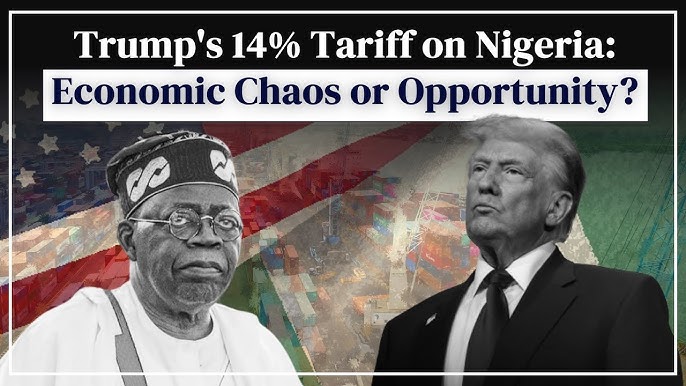
What Businesses and Investors Should Do in Light of Trump’s Tariff Agenda and Its Impact on Nigeria
President Donald Trump’s aggressive new tariff policy, a sweeping 14% import duty marks a dramatic shift in the global trade environment. While primarily aimed at China and other large exporters, the ripple effects could be harsh for Nigeria, especially given its deep reliance on oil exports and imported goods. But amid the uncertainty lies an opportunity if Nigerian businesses and investors act decisively and strategically.
Here’s what businesses and investors should consider doing:
1. Diversify Away from Oil Dependency
Why: The U.S. tariff will reduce the competitiveness of Nigerian crude oil, which makes up 80% of Nigeria’s exports to the U.S. A drop in demand—even a modest 14%—could mean over $1 billion in lost revenue annually.
What to do:
- Investors should channel capital into non-oil sectors like agriculture, fintech, digital services, and renewable energy.
- Businesses should develop and expand product lines in sectors less dependent on exports, such as local manufacturing, processed foods, or agribusiness.
- Oil-dependent firms should begin exploring long-term contracts with buyers in China, India, and across Africa to reduce reliance on U.S. demand.
2. Localize Supply Chains and Input Sources
Why: Tariffs and global tensions are driving up the cost of imported machinery, raw materials, and essential commodities. This increases business overheads and reduces profit margins.
What to do:
- Manufacturers should explore sourcing materials locally or from regional partners within Africa.
- Agri-businesses and food producers should invest in growing and processing local alternatives to U.S. wheat and other imported staples.
- Importers should renegotiate contracts or seek alternative suppliers in tariff-exempt countries.
3. Leverage the African Continental Free Trade Area (AfCFTA)
Why: With regional trade integration, businesses can mitigate external shocks by turning toward intra-African markets.
What to do:
- Exporters should prioritize building distribution networks across West Africa and beyond.
- Investors should back businesses that produce for the African market—products with cross-border appeal such as packaged foods, textiles, or construction materials.
- Tech startups can scale solutions across borders, targeting regional e-commerce, logistics, and financial services.
4. Hedge Currency Risks and Secure Foreign Exchange Alternatives
Why: The naira is under intense pressure. Lost oil revenue will further deplete FX reserves, potentially pushing the naira to N2,000/$1.
What to do:
- Businesses that rely on imports should consider hedging currency exposure or maintaining foreign currency reserves.
- Investors should look for opportunities in export-oriented ventures that can earn FX and remain resilient during currency devaluations.
- Trade-focused businesses can explore bilateral deals that enable payments in local currencies, especially with BRICS nations.
5. Embrace Value Addition and Domestic Manufacturing
Why: Exporting raw commodities—especially crude—leaves Nigeria exposed to price shocks and trade policies beyond its control.
What to do:
- Entrepreneurs should shift focus toward refining, processing, or packaging local products to increase value.
- Investors should back local production hubs for items like pharmaceuticals, food products, and consumer electronics.
- Governments and public-private partnerships should streamline policies to support manufacturers with power, infrastructure, and incentives.
6. Prepare for Inflation and Price Sensitivity
Why: Rising input costs and weaker currency will increase inflation, squeeze consumer spending, and alter demand patterns.
What to do:
- Retailers and FMCG companies should explore product downsizing or value bundles to meet changing consumer behaviors.
- Financial services can innovate credit solutions and savings products that help consumers manage volatility.
- Startups can create tech solutions in budgeting, price comparison, and food delivery to assist cost-conscious customers.
7. Monitor U.S.–China Trade Dynamics for Strategic Positioning
Why: As U.S. firms shift supply chains away from China, new opportunities may open for alternative sourcing and manufacturing locations.
What to do:
- Nigeria can pitch itself as a trade partner or assembly location for U.S. firms if infrastructure challenges are addressed.
- Private equity and VC firms should keep an eye on export-oriented startups with scalable infrastructure and logistics capabilities.
Conclusion: Transforming Challenge into Opportunity
Trump’s new tariff regime is a wake-up call for Nigeria. The risk to export earnings, inflation, and economic stability is real—but it is also a rare moment to recalibrate the economy.
For businesses: Adapt fast, localize operations, and explore regional markets.
For investors: Back diversification, export alternatives, and FX-generating assets.
For policymakers: Enable ease of doing business, support manufacturing, and fast-track infrastructure upgrades.
The next few months will test Nigeria’s economic resilience. But for those who read the signs and respond boldly, this could be the start of a more sustainable, self-reliant economic future.